
Why Do My Joints Click and Should I Be Worried?
by: Chin Yi Khern, Physiotherapist, Regis Wellness
Last updated: March 16, 2026
You're at the gym, halfway through a set of squats, and your knees pop. Loudly. The person next to you glances over. You rack the bar early and wonder if you just did something terrible to your joints. You've been wondering the same thing every session for the last six months. And you've been slowly doing fewer squats because of it.
Joint sounds are one of the most common reasons people start modifying their exercise, avoiding certain movements, or Googling their symptoms at 11pm. And understandably so. When something inside your body makes a noise you weren't expecting, the instinct is to assume something is wrong.
But your body makes sounds for all kinds of reasons. Some mean nothing. Some are worth paying attention to. And a few, a very small number, warrant getting assessed. The problem is that most people have no framework for telling them apart. So they treat every click as a warning sign, and that response, over time, can do more damage than the click ever could.
Manage Workout Injuries with Regis Wellness
High quality, effective, holistic treatment
Your Body Talks in Sounds, Not Sentences
Joint sounds are information. They're not diagnoses. But they're not meaningless either.
The medical term for joint noises is crepitus, which comes from the Latin word meaning "to rattle." It covers everything from a quiet click to a grinding sensation, and it can happen in virtually any joint: knees, shoulders, ankles, wrists, spine, hips, fingers. Some sounds are mechanical, caused by normal structures moving over each other. Some are fluid dynamics, gas behaving the way gas behaves under changing pressure. And some, occasionally, are signals that something has changed inside the joint.
The challenge is that the sounds don't come with labels. A pop in your knee during a squat could be a gas bubble releasing, which is completely harmless. Or it could be a meniscus catching, which might need attention. They can sound identical. The sound alone doesn't tell you which one it is.
What does tell you is context. What accompanies the sound. Whether it's new or old. Whether it changes your ability to move. Whether it hurts. That context is the framework, and once you have it, most joint sounds stop being frightening and start being understandable.
The Pop: Gas Bubbles and Nothing More
The most common joint sound, by far, is the painless pop or crack. You bend your knee and it clicks. You rotate your shoulder and something pops. You stand up from your desk and your back makes a sound like bubble wrap.
This is cavitation. Your joints are surrounded by synovial fluid, a thick liquid that lubricates and nourishes the joint surfaces. When the joint moves or is stretched, the pressure inside the capsule changes. Dissolved gases, mostly carbon dioxide and nitrogen, form a small bubble. When that bubble collapses, it produces a popping sound. That's it. No damage. No wear. No tissue tearing. Just physics.
You might notice that once a joint has popped, you can't make it pop again for another 15 to 20 minutes. That's because the gas needs time to redissolve into the fluid before a new bubble can form. This refractory period is actually one of the clearest signs that a sound is cavitation: if it only happens once and then goes silent for a while, it's almost certainly gas.
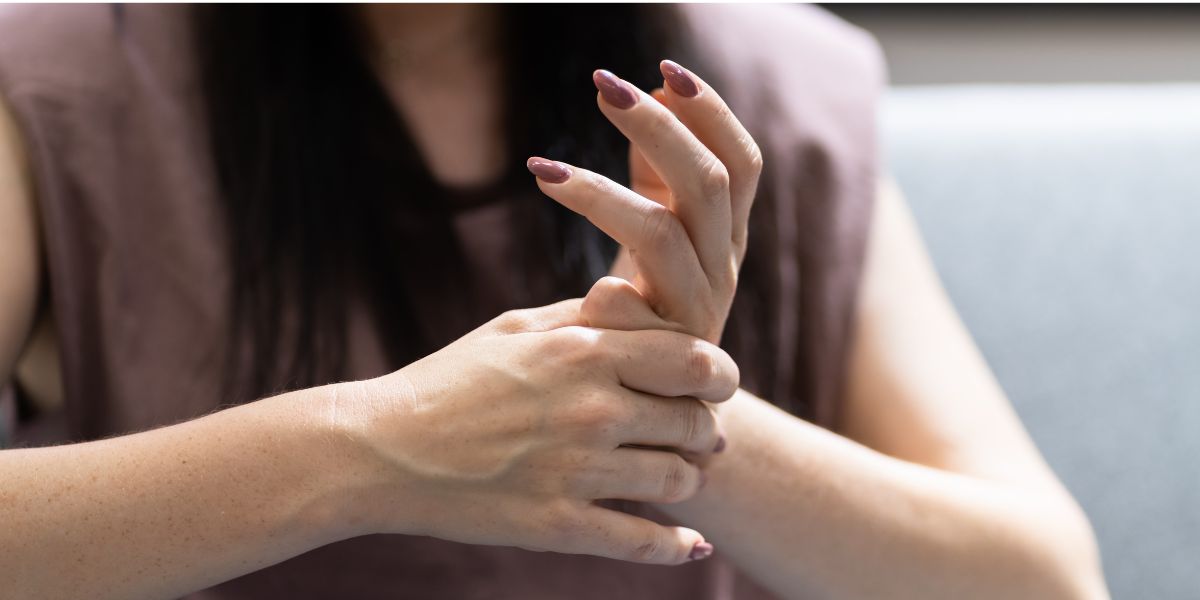
This is the mechanism behind knuckle cracking. And if you've ever been told that cracking your joints will give you arthritis, you can stop worrying. Multiple studies comparing habitual knuckle crackers with non-crackers have found no correlation between joint cracking and arthritis. None. The evidence is consistent across decades of research. Cracking your joints does not cause arthritis, and there's no evidence it damages the joint in any way.
And yet the myth persists. It persists in conversations, in parental warnings, and most importantly, in the behaviour of people who stop activities because their joints make noise. Which brings us to the real issue.
The Sound That Worries You Is Probably Normal. The Worry Itself Might Not Be.
Here's where this gets interesting for your health, not just your curiosity.
Research in pain science has shown that your beliefs about your body directly influence how much pain you experience. This is called the nocebo effect, the opposite of placebo. If someone tells you your joints are "degenerating" or "wearing out," you're more likely to perceive pain, guard the joint, and avoid activities, even if the underlying changes are completely normal for your age and aren't causing any actual damage.
Joint sounds trigger this effect constantly. You hear your knee click and your brain files it under "something is wrong." You start paying more attention to the knee. You notice sensations you would have ignored before. You modify your movement to avoid the sound. Over weeks and months, you move less. Your muscles weaken. Your joint stiffness increases. And eventually, the knee that was perfectly healthy starts to actually hurt, not because of the clicking, but because of everything you stopped doing in response to it.
This pattern is remarkably common. We talked about it in our article on why resting makes things worse. The mechanism is the same: avoiding movement to "protect" a joint that doesn't need protecting leads to deconditioning, which leads to real symptoms, which leads to more avoidance. The click wasn't the start of a problem. The fear of the click was.
The Snap: Tendons Moving Over Bone
The second most common joint sound is a snapping or clunking sensation. This one feels different from a gas bubble pop. It's often repeatable (you can make it happen again immediately) and tends to occur during specific movements.
What's usually happening is that a tendon or ligament is sliding over a bony prominence. As it moves, it catches slightly and then releases, producing a snap. This is common in the hip (a condition sometimes called "snapping hip syndrome"), the shoulder, and the outside of the knee.
In most cases, this is harmless. The tendon isn't being damaged by the movement. It's just gliding over a structure in a way that produces a sound. If there's no pain, no swelling, and no loss of function, it's generally something you can acknowledge and move on from.
Where it becomes worth addressing is when the snapping is painful, or when it starts affecting how you move. A painful snapping hip during running might indicate irritation of the iliotibial band or the hip flexor tendon. A clunking shoulder during overhead movements in tennis or badminton could suggest a labral issue. In these cases, the snap is a clue, not a crisis. It's telling you where to look, and a physiotherapist can assess whether the movement pattern needs correcting or whether the structure itself needs treatment.
The Grind: When the Sound Changes Character
This is the one that deserves more attention. Not panic, but attention.
Grinding, grating, or crunching sensations during movement have a different feel from pops and snaps. They tend to be continuous rather than a single event. You feel them throughout the range of motion, not just at one point. And they sometimes come with a roughness or catching quality that pops and clicks don't have.
This type of sound can indicate changes to the cartilage surfaces inside the joint. When cartilage becomes roughened from wear, early osteoarthritis, or previous injury, the two joint surfaces don't glide smoothly against each other anymore. The roughened surfaces create friction, which you perceive as grinding or grating.
Before the anxiety spikes, two important points.
- First, cartilage changes are incredibly common and don't always correlate with pain. MRI and X-ray studies of people with no symptoms routinely find cartilage changes, disc bulges, and other "abnormalities" that are completely normal for their age. A grinding knee doesn't automatically mean you're heading for a knee replacement. It might mean you have age appropriate changes that aren't causing any functional problem.
- Second, even when cartilage changes are present, the single most effective intervention is strengthening the muscles around the joint. Stronger muscles absorb more load, reduce the stress on the joint surfaces, and often eliminate the pain even when the cartilage itself hasn't changed. This is why clinical guidelines for early osteoarthritis recommend exercise, not rest, as the primary treatment. Joint mobilisation can improve range of motion, and targeted physiotherapycan build the muscular support your joint needs to function without pain.
The key distinction: grinding with pain, swelling, or progressive loss of movement warrants assessment. Grinding without any of those symptoms is worth noting but rarely worth worrying about.
The Sounds That Actually Need Attention
Most joint sounds are noise. A small number are signals. Here's how to tell the difference.
- A sudden pop during sport or physical activity followed by immediate pain, swelling, or inability to bear weight.This is the one to take seriously. A sharp pop during a change of direction on the badminton court, followed by the knee giving way, could indicate an ACL injury. A "gunshot" sound in the calf during a sprint could be an Achilles tendon rupture. These are acute injuries. The sound is the event, not a background noise. If this happens, stop, protect the area, and get assessed.
- Clicking or catching that locks the joint in position. If your knee clicks and then gets stuck, unable to fully straighten or bend until you move it in a specific way to "unlock" it, that's mechanical locking. It often indicates a loose body in the joint or a meniscus tear that's interfering with normal movement. It's not an emergency, but it warrants investigation.
- Joint sounds that started after a specific injury and weren't there before. A knee that never clicked before a fall and now clicks every time you bend it has a different story from a knee that's clicked painlessly for ten years. New sounds after trauma are worth having assessed because they might reflect structural changes.
- Painful grinding that's getting progressively worse over weeks or months. Gradual deterioration in how a joint feels, increasing pain, decreasing range of motion, more frequent swelling, suggests something is changing inside the joint that could benefit from early intervention.
- Sounds accompanied by swelling, warmth, or redness. These are inflammatory signs. Joint sounds on their own are mechanical. Joint sounds with inflammation point toward a clinical process that needs evaluation.
What to Do With Sounds That Don't Need Attention
For the vast majority of people reading this, the answer is: nothing. Keep moving.
Painless clicking during squats? Keep squatting. Your shoulder pops when you reach overhead but feels fine otherwise? Keep reaching. Your back cracks when you stand up from your desk? Stand up more often, not less.
The worst thing you can do with a harmless joint sound is let it change your behaviour. Avoiding movements because they make noise leads to exactly the kind of deconditioning and weakness we've covered extensively: in our article on why lower back pain worsens from sitting, in our piece on why massage wears off when the real problem isn't the muscle, and in our exploration of what inactivity does to your body over time. The theme is consistent: your body needs loading, not protection from sounds.
If a sound genuinely bothers you or you want reassurance, a physiotherapy assessment can clarify what's happening in minutes. Often, the most valuable thing a physio does in these situations isn't treatment. It's explanation. Understanding why your knee clicks and hearing from a qualified clinician that it's normal is sometimes all it takes to remove the anxiety and get you back to training without hesitation.
The Short Answer
Most joint sounds are your body operating normally. Gas bubbles form and collapse. Tendons glide over bone. Joints shift and settle. It sounds dramatic, but it's just mechanics. The small number of sounds that do mean something almost always come with other signals: pain, swelling, instability, or a loss of function. If you're not sure which category yours falls into, we can figure it out quickly. Reach out on WhatsApp whenever you're ready. Odds are, your joints are doing better than you think.
Manage Workout Injuries with Regis Wellness
Disclaimer:
The information on this website, including but not limited to, text, graphics, images, videos and all other materials contained on this website is for informational purposes only. None of the material is meant to replace a certified and registered Doctor's professional medical advice, diagnosis, and treatment.
No warranties or representations are given in respect of the medical information. Regis Wellness, Regis Wellness’s staff, and the website's operator will not be held liable if a user suffers any injury or loss after relying upon the medical information on this website.
Any devices used for technology-enhanced therapies are intended for use only for general well-being purposes or to encourage or maintain a healthy lifestyle and is not intended to be used for any medical purpose (such as the detection. diagnosis, monitoring, management or treatment of any medical condition or disease). Any health-related information provided by this device or software should not be treated as medical advice. Please consult a certified and registered Doctor for any medical advice required. As with all medical conditions, there are exceptions and nuances to individuals’ condition and treatment modalities. We aim to provide only a general understanding for each section.