
Egg Quality and TCM: How Can Chinese Medicine Help
by: Amanda Chua, TCM Physician, Regis Wellness
Last updated: September 1, 2026
You cannot create new eggs. But you can change the environment in which your existing eggs mature. Every egg you ovulate spent roughly 90 days developing inside your body, shaped by what you ate, how you slept, how stressed you were, and how well your blood circulated to your ovaries. That window is where TCM does its most powerful work.
If you have been told that your egg quality is declining, or that your AMH is lower than expected, it is easy to feel like the verdict has already been handed down. But the science tells a more nuanced story, and it is one that TCM has understood for a very long time.
Support Your Fertility at Regis Wellness
High quality, effective, holistic treatment
Egg Quality and Egg Quantity Are Not the Same Thing
This is one of the most important distinctions in fertility, and one that often gets lost in the anxiety of a diagnosis.
Your ovarian reserve, measured by AMH (anti-Müllerian hormone) and antral follicle count, tells you how many eggs you have remaining. This number declines naturally with age and cannot be increased. No treatment, whether Western medicine or TCM, can create new eggs. You were born with your lifetime supply
Egg quality, however, refers to the health and developmental potential of the eggs available. It encompasses factors such as chromosomal integrity, mitochondrial function, and the egg’s ability to mature, fertilise successfully, and support healthy early embryo development.
The critical insight is this: while you cannot change your egg count, you can influence the quality of the eggs that are currently maturing. And that is where the 90-day window becomes so important.
The 90-Day Window: Why Timing Matters More Than You Think
Every egg you ovulate did not simply appear that month. It went through a maturation process called folliculogenesis that spans approximately 90 days. During those three months, a dormant follicle was recruited, began developing, and gradually matured into an ovulation-ready oocyte.
What makes this significant is that during this entire 90-day journey, the developing egg is sensitive to its environment. The nutrients it receives, the blood flow to the ovaries, the levels of oxidative stress in the body, and the hormonal balance all influence how well that egg matures. A randomised controlled trial published in Reproductive Biology and Endocrinology found that pretreatment over this window improved ovarian response and embryo quality in women with diminished ovarian reserve, reinforcing just how impactful this 90-day period can be.
This is why our physicians typically recommend beginning TCM treatment at least three months before you plan to conceive or start an IVF cycle. The egg you want to conceive with needs support during its development, not after.
What TCM Has Always Known: Kidney Jing and the 7-Year Cycle
Long before Western science mapped the 90-day folliculogenesis timeline, TCM had its own framework for understanding egg quality and reproductive vitality. It centres on a concept called Kidney Jing (精), often translated as "essence."
In TCM, Jing is the fundamental substance that governs your constitution, your development, and your reproductive capacity. It is stored in the Kidneys (which in TCM refer to a broader system than the anatomical organs) and it is what you draw upon to produce healthy eggs, sustain pregnancy, and recover after birth.
TCM has long observed that a woman's Jing moves in seven-year cycles. At 14, menarche begins. At 21, Kidney energy stabilises. At 28, the body reaches its peak reproductive vitality. At 35, Jing begins its gradual decline. At 42, the decline deepens.
What is remarkable is how closely this mirrors what modern reproductive medicine now confirms. Western fertility data consistently shows that egg quality begins to decline more noticeably after 35, with a steeper drop after 40. TCM arrived at this same understanding centuries ago, not through blood tests and ultrasounds, but through careful observation of thousands of women across generations.
The difference is in what TCM does with this knowledge. Rather than treating age as a fixed verdict, TCM treats the body's internal environment as something you can actively nourish and support, even as Jing naturally declines.
The Jing and Mitochondria Connection
Here is where the ancient and the modern converge in a way that gives both systems more credibility.
In TCM, when Jing is depleted, you see signs like poor egg quality, low ovarian reserve, fatigue, lower back weakness, premature greying, and a general sense of depletion. The treatment is to nourish Jing, tonify the Kidneys, and restore the body's deepest energy reserves.
In Western reproductive science, the cellular equivalent of this "essence" is mitochondrial function. Mitochondria are the energy-producing structures inside every cell, and egg cells contain more mitochondria than almost any other cell type in the human body. This is because eggs require an enormous amount of energy to mature properly, divide their chromosomes correctly during fertilisation, and fuel the early stages of embryo development before the embryo begins generating its own energy.
As we age, mitochondrial function in oocytes declines. The eggs produce less ATP (cellular energy), become more vulnerable to oxidative damage, and are more likely to make errors during chromosome division, which is one of the leading causes of miscarriage and failed implantation.
What TCM calls "nourishing Kidney Jing" is, in many ways, what Western science describes as supporting mitochondrial function, reducing oxidative stress, and improving the cellular environment in which eggs develop. The language is different. The target is remarkably similar.
This is supported by growing research. A 2024 systematic review and meta-analysis published in Advances in Nutrition found that antioxidant supplementation, particularly CoQ10, improved IVF outcomes in women with ovarian ageing, with the most consistent benefits seen after three months of pretreatment. Separately, a 2026 meta-analysis published in Frontiers in Endocrinology found that acupuncture increased clinical pregnancy rates by 25% and embryo implantation rates by 30% in women with diminished ovarian reserve undergoing IVF. These findings align with what TCM physicians have observed clinically for generations.
How TCM Supports Egg Quality
TCM does not claim to reverse your biological clock. What it does is optimise the conditions in which your eggs mature during that crucial 90-day window, giving them the best possible chance to develop well.
Acupuncture plays a central role. By stimulating specific points along the Kidney, Spleen, and Liver meridians, acupuncture helps improve blood flow to the ovaries and uterus, regulate the hormonal signals involved in follicle development, and reduce the stress hormones that can impair reproductive function. Points commonly used in fertility acupuncture include KD3 (Tai Xi), SP6 (San Yin Jiao), and Ren 4 (Guan Yuan), all of which are traditionally indicated for nourishing Kidney Jing and supporting reproductive vitality.
A 2026 systematic review published in the Journal of Integrative Medicine found that acupuncture improved high-quality embryo rates in IVF patients, with the strongest effects seen in courses of five to eight sessions timed around the stimulation cycle. The review concluded that acupuncture is an effective adjunct therapy for improving embryo quality, supported by moderate-certainty evidence.
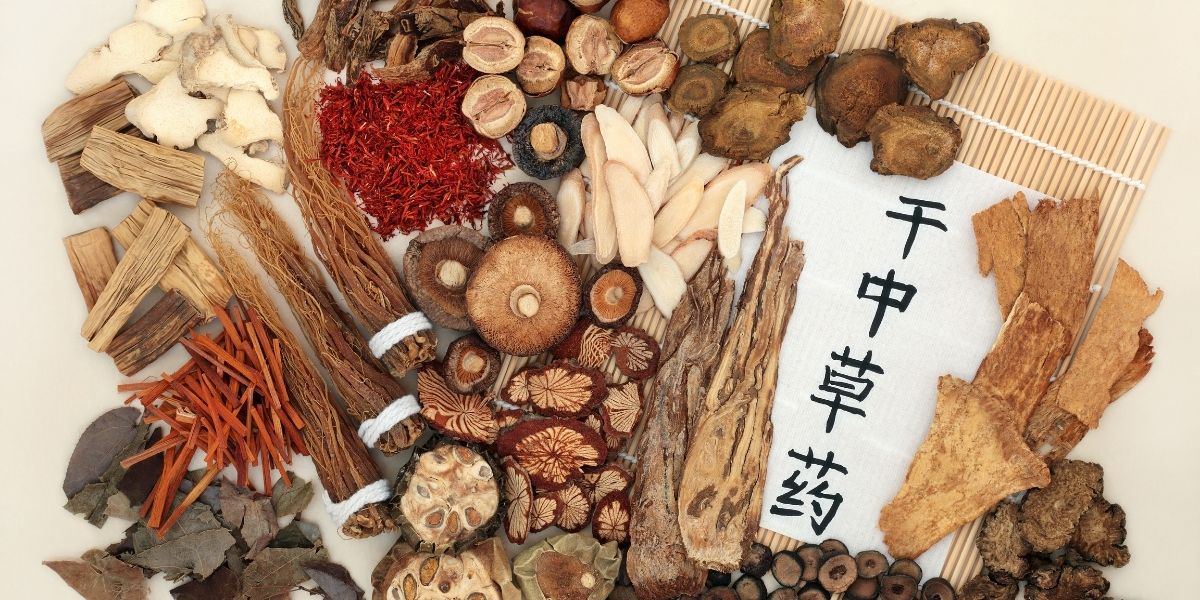
Chinese herbal medicine allows us to work on the internal environment more deeply. Kidney-tonifying and blood-nourishing formulas are prescribed based on your specific TCM diagnosis. Classic herbs like Shu Di Huang (prepared rehmannia root), Dang Gui (angelica root), Gou Qi Zi (goji berry), and Tu Si Zi (dodder seed) have been used for centuries to nourish Jing, strengthen the Kidneys, and support the reproductive system. Research continues to explore the mechanisms behind these traditional formulas: a meta-analysis published in Annals of Medicine reviewing CoQ10 pretreatment in women with diminished ovarian reserve found significant improvements in fertilisation rates and high-quality embryo outcomes, pointing to the importance of supporting the ovarian environment before conception.
Our physicians tailor these formulas to your individual pattern. A woman with Kidney Yin deficiency (presenting with night sweats, heat sensations, and a dry mouth) will receive a very different prescription from a woman with Kidney Yang deficiency (presenting with cold extremities, fatigue, and a pale complexion). If Yang deficiency is part of your pattern, warming herbs and moxibustion may be incorporated to restore warmth and circulation to the reproductive system.
Depending on your presentation, our physicians may also recommend cupping or gua sha to help resolve Qi stagnation, improve circulation, and clear blockages that may be reducing blood flow to the pelvis.
What You Can Do at Home During Your 90-Day Window
Professional treatment lays the foundation, but what you do between sessions matters just as much. Here are the areas our physicians most commonly focus on with patients who are actively working on egg quality.
- Nourish your blood and Jing through food - In TCM, the quality of your blood directly affects the quality of your eggs, because blood is what delivers nutrients and oxygen to the developing follicles. Focus on foods that build blood and nourish essence:
- bone broth
- black sesame seeds
- walnuts
- goji berries
- red dates
- eggs
- dark leafy greens
- wild-caught fish
- organ meats
- Consider targeted supplementation - CoQ10 (specifically the ubiquinol form, which is more bioavailable) is one of the most well-researched supplements for egg quality. As highlighted in a review published by the National Center for Biotechnology Information, CoQ10 supports mitochondrial energy production and provides antioxidant protection in reproductive cells, with particular relevance for women over 35 or those with diminished ovarian reserve. Vitamin D, folate, and omega-3 fatty acids are also commonly recommended. Always discuss supplementation with your physician to ensure it complements your herbal prescription rather than conflicting with it.
- Manage stress actively - This is not a soft recommendation. Chronic stress elevates cortisol, which disrupts the hypothalamic-pituitary-ovarian (HPO) axis, the hormonal cascade that governs follicle development and ovulation. In TCM, prolonged stress causes Liver Qi stagnation, which impairs the smooth flow of Qi and blood to the reproductive organs. If stress has been a significant factor in your life, addressing it is not optional: it is part of the fertility treatment.
- Prioritise sleep - In TCM, sleep is when the body replenishes Yin and blood, both of which are essential for nourishing Jing and supporting egg development. Poor sleep, particularly chronic late nights, depletes the very resources your eggs need to mature well. If you struggle with insomnia, it is worth addressing this alongside your fertility support.
- Move your body, but do not overdo it - Moderate exercise improves blood circulation, reduces stress, and supports hormonal balance. But excessive or high-intensity training can deplete Qi and blood, and in some cases, disrupt ovulation entirely (a condition TCM associates with Qi and blood deficiency). Walking, yoga, swimming, and light strength training are ideal. Save the HIIT sessions for after your fertility journey.
If You Are Preparing for IVF
TCM and IVF are not competing approaches. Many of our patients at our TCM Clinic use them together, and the evidence increasingly supports this combination.
The ideal timeline is to begin TCM fertility treatment at least two to three months before your IVF stimulation cycle. This gives your body a full 90-day window to optimise the eggs that will be retrieved. During this preparation phase, acupuncture and herbal medicine focus on nourishing Kidney Jing, building blood, improving ovarian blood flow, and creating the hormonal conditions that support healthy follicle development.
During the IVF cycle itself, acupuncture can be timed to specific stages: during stimulation to support follicle growth, before and after embryo transfer to improve uterine receptivity and reduce anxiety, and during the luteal phase to support implantation. If you are undergoing IVF or IUI, our physicians will coordinate your TCM treatment around your clinic's protocol so the two work together seamlessly.
How Long Does It Take to See Results?
The honest answer is that it depends on your starting point. If your primary issue is lifestyle-related (chronic stress, poor diet, sleep deprivation, over-exercise), improvements in cycle quality and symptoms can often be seen within one to two cycles of consistent treatment.
For deeper patterns involving Kidney Jing deficiency or diminished ovarian reserve, the timeline is typically longer. Our physicians generally recommend committing to at least three months, aligned with the 90-day egg maturation cycle. This is not arbitrary. It reflects the biological reality that the egg you ovulate three months from now is being influenced by the treatment and changes you make today.
Some women see measurable improvements in their IVF outcomes (more eggs retrieved, better embryo grades) after a single 90-day preparation cycle. Others, particularly those with more complex or longstanding patterns, benefit from a longer course of treatment. Your physician will assess your progress regularly and adjust your plan accordingly.
Your Egg Quality Is Not a Fixed Verdict
Egg quality is not a number stamped on your chart that cannot change. It is an ongoing process, one that unfolds over 90 days and responds to real, tangible inputs: the food you eat, the blood flow to your ovaries, the balance of your hormones, and the state of your energy reserves. You may not be able to turn back time, but you can absolutely influence the journey your eggs take before they are ovulated. That is not wishful thinking. It is biology, and it is where TCM has always focused.
If you are planning to conceive, preparing for IVF, or simply want to understand where your body stands, our TCM physicians can assess your constitution, identify the patterns that may be affecting your egg quality, and create a treatment plan tailored to your 90-day window. Book a consultation with us via WhatsApp and give your eggs the best environment to thrive.
Support Your Fertility at Regis Wellness
Disclaimer:
The information on this website, including but not limited to, text, graphics, images, videos and all other materials contained on this website is for informational purposes only. None of the material is meant to replace a certified and registered Doctor's professional medical advice, diagnosis, and treatment.
No warranties or representations are given in respect of the medical information. Regis Wellness, Regis Wellness’s staff, and the website's operator will not be held liable if a user suffers any injury or loss after relying upon the medical information on this website.
Any devices used for technology-enhanced therapies are intended for use only for general well-being purposes or to encourage or maintain a healthy lifestyle and is not intended to be used for any medical purpose (such as the detection. diagnosis, monitoring, management or treatment of any medical condition or disease). Any health-related information provided by this device or software should not be treated as medical advice. Please consult a certified and registered Doctor for any medical advice required. As with all medical conditions, there are exceptions and nuances to individuals’ condition and treatment modalities. We aim to provide only a general understanding for each section.