Gong Han (宫寒): The TCM Pattern That May Be Causing Your Infertility
by: Amanda Chua, TCM Physician, Regis Wellness
Last updated: September 1, 2026
In Chinese, the word for uterus is 子宮 (zǐ gōng), which translates to "palace for the child." And just like any palace, it needs to be warm, nourished, and well kept. When TCM physicians talk about a "cold uterus," we are describing a palace where the warmth has been lost. And in Singapore's air-conditioned, iced drink culture, this happens far more often than you would expect.
If you have been trying to conceive without success, and especially if your medical tests have come back "normal," Gong Han may be a pattern worth understanding. It is a TCM pattern commonly seen in women seeking fertility support, and one that can often be addressed through dietary, lifestyle and TCM fertility treatment approaches.
Support Your Fertility at Regis Wellness
High quality, effective, holistic treatment
What Is Gong Han (宫寒)?
Gong Han, sometimes called cold uterus or cold womb syndrome, is a TCM pattern of disharmony where the uterine environment lacks sufficient Yang energy and blood circulation to support conception, implantation, and a healthy pregnancy.
It is important to understand that "cold" here does not mean your uterus is literally cold to the touch. It refers to a functional state. In TCM, Yang represents the body's warming, activating energy. When Yang is deficient, particularly Kidney Yang, the uterus does not receive the warmth and circulation it needs. Blood flow to the reproductive organs slows down, the uterine lining may not develop properly, and the environment becomes less hospitable for an embryo to implant and grow.
Interestingly, some of the areas that TCM considers when assessing Gong Han are also relevant in modern fertility care. Menstrual health, uterine circulation and the endometrial environment, for example, can all play a role in reproductive health. TCM approaches these factors through a different framework, using concepts such as Gong Han, constitution and pattern differentiation to understand the individual picture.
In TCM, we often refer to progesterone as the "Yang hormone." It is the hormone responsible for raising your basal body temperature (BBT) after ovulation, thickening the uterine lining, and maintaining the conditions needed for early pregnancy. When Yang is deficient, progesterone response tends to be weak, and this shows up clearly on a BBT chart as a temperature that barely rises in the second half of your cycle. If you have been charting your BBT and noticed this pattern, it may be worth exploring whether Yang deficiency is playing a role.
Why Cold Uterus Is So Common in Singapore
Here is the irony. You live in one of the hottest countries on earth, yet the typical Singaporean lifestyle is practically designed to create a cold uterus.
Think about your average day. You wake up in an air-conditioned bedroom, commute in an air-conditioned train or car, work for eight or more hours in an air-conditioned office, and come home to turn the air-conditioning back on. Throughout the day, you might reach for an iced kopi, a cold-pressed juice, a bubble tea, or an açai bowl. You might favour salads, sushi, or overnight oats because they feel "healthy." On weekends, you might wear a cropped top or a thin dress because, well, it is Singapore and it is 32°C outside.
None of these habits are harmful in isolation. But over months and years, this constant exposure to cold, both externally (air-conditioning, clothing that leaves the abdomen and lower back exposed) and internally (cold and raw foods), gradually depletes the warming Yang energy in your body. The uterus, which sits deep in the lower abdomen and depends on strong blood circulation and warmth to function well, is often the first organ system to feel the effects.
This is why Gong Han is not just a pattern we see in women from colder climates. It is remarkably common right here in Singapore, and many women have no idea they have it.
How to Recognise the Signs
Gong Han does not always announce itself dramatically. Many women live with these symptoms for years without connecting them to their reproductive health. Here are some of the most common signs our physicians look for:
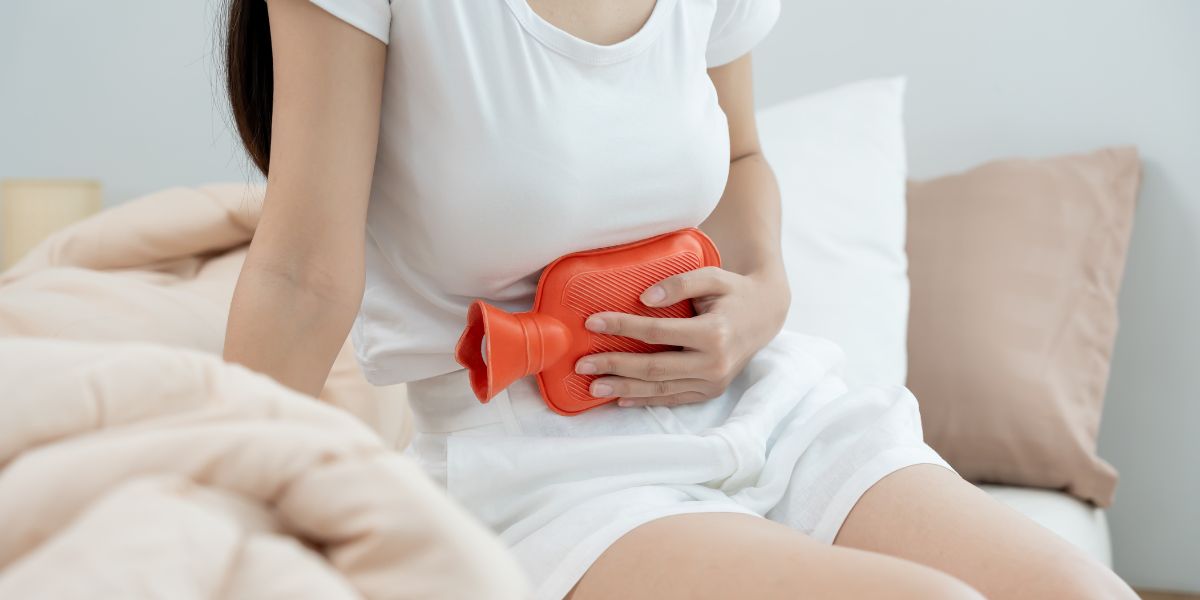
Your periods may arrive late or be irregular. The menstrual blood tends to be dark in colour, sometimes purplish or even blackish, and often contains clots. You may experience significant cramping, especially on the first day or two, and you might notice that the pain eases noticeably when you apply warmth, such as a hot water bottle or a warm compress on your lower abdomen. If your period cramps consistently improve with heat, that is a strong signal.
Beyond your cycle, you might notice a persistent cold sensation in your lower abdomen, as if that area of your body never quite warms up. Cold hands and feet are common, even when the weather is warm. You may experience lower back pain that worsens around your period, low energy, water retention, frequent urination, and a noticeably low sex drive.
If you have been charting your basal body temperature, one of the clearest indicators is a BBT that fails to rise adequately after ovulation. In a healthy cycle, your temperature should shift upward by about 0.3 to 0.5°C in the luteal phase and stay elevated for around 12 to 14 days. If your chart shows a flat or barely-there rise, or if your luteal phase is consistently shorter than 11 days, it may suggest that your body is not producing or responding to progesterone effectively, which is the Yang hormone connection we discussed earlier.
Two Types of Cold: Acquired and Endogenous
Not all Gong Han is created the same way, and understanding the difference matters because it affects how we treat it.
Acquired cold comes from the outside. It is the result of lifestyle and environmental factors: years of consuming cold and raw foods, prolonged exposure to air-conditioning, wearing clothes that leave the abdomen and lower back exposed, sitting on cold surfaces, or swimming frequently in cold water. This type is very common in Singapore and tends to respond well to lifestyle adjustments combined with warming treatments.
Endogenous cold comes from within. It develops when the body's own "internal fire" is constitutionally weak, usually rooted in Kidney Yang deficiency. Some women have always run cold. They were the child who always needed an extra blanket, who always had cold extremities, who never seemed to have as much energy as their peers. For these women, lifestyle changes alone may not be enough. The internal warming capacity itself needs to be strengthened through treatment.
In practice, many women have a combination of both. Years of cold-inducing habits layered on top of a naturally cooler constitution. This is why a proper TCM assessment is so valuable: it allows us to identify not just whether you have Gong Han, but what type, how deep it runs, and what the most effective treatment approach will be for your specific body.
How TCM Treats Cold Uterus to Support Fertility
The goal of treatment is straightforward: restore warmth, improve blood circulation to the uterus and reproductive organs, and create an internal environment that supports conception and implantation. The way we get there depends on your individual pattern, but typically involves a combination of the following.
Acupuncture is often the foundation. By stimulating specific acupoints, acupuncture helps improve blood flow to the uterus, regulate the menstrual cycle, and support hormonal balance. Many women also find that acupuncture significantly reduces the stress and anxiety that often accompany the fertility journey, which in itself can help improve ovulation and reproductive function.
Moxibustion is one of the most powerful tools we have for warming the uterus. It involves heating mugwort near specific acupoints to deliver deep, penetrating warmth into the body. Mugwort has been used in TCM for centuries specifically for its ability to dispel cold, improve circulation, and warm the meridians. For women with Gong Han, moxibustion on the lower abdomen and lower back can feel profoundly comforting, and research has shown it may support outcomes in women undergoing IVF by improving the uterine environment.
Chinese herbal medicine allows us to address the root pattern from the inside. Warming and blood-nourishing formulas are prescribed based on your specific diagnosis. Classic formulas that warm the menses and invigorate blood have been used for this purpose for over a thousand years, and our physicians will tailor the prescription to your individual needs, adjusting it as your body responds over the course of treatment.
Depending on your presentation, our physicians may also incorporate cupping or gua sha to help resolve Qi stagnation and dispel cold and dampness from the body, further supporting circulation and reproductive vitality.
What You Can Do at Home
While professional treatment addresses the root cause, there is plenty you can do between sessions to support the process.
- Start with your diet - Reduce cold and raw foods, particularly around your period. This means fewer iced drinks, salads, raw sushi, smoothies, and chilled fruits. Instead, favour warm, cooked meals. Incorporate warming ingredients like ginger, cinnamon, red dates, longan, lamb, and walnuts. A simple ginger and red date tea after your period can help replenish warmth and support blood production.
- Keep your lower abdomen and lower back covered, especially in air-conditioned environments - A light scarf, a cardigan, or simply keeping a blanket at your desk can make a difference over time. At home, try placing a warm compress or hot water bottle on your lower abdomen for 15 to 20 minutes in the evening, particularly during the follicular phase (from menstruation to ovulation).
- Avoid going barefoot on cold floors - Your feet act as a thermostat for your body. When they get cold, blood vessels throughout your lower body constrict, reducing circulation to the pelvic area and the uterus.
- Stay active - Gentle, regular movement improves overall circulation and helps warm the body from within. Walking, yoga, swimming in warm water, and light strength training are all excellent choices. Avoid overly intense exercise, which can sometimes deplete rather than build your body's energy reserves.
- And manage your stress levels - Chronic stress drives the sympathetic nervous system, which constricts blood vessels and reduces blood flow to the reproductive organs. Practices like meditation, deep breathing, or even just taking regular breaks from your screen can support the relaxation response your body needs. If stress or anxiety has been a significant factor in your life, our TCM stress relief treatments may also be worth exploring alongside your fertility support.
How Long Does It Take?
This is one of the most common questions we hear, and the honest answer is that it depends on the depth and type of your Gong Han pattern, as well as how long it has been present.
For women with primarily acquired cold from lifestyle factors, noticeable improvements in symptoms (warmer extremities, less painful periods, improved menstrual colour and flow) often appear within four to eight weeks of consistent treatment and lifestyle changes.
For deeper, constitutional Kidney Yang deficiency, the timeline tends to be longer. In TCM, we often work within the framework of the egg maturation cycle, which takes approximately 90 days. This means that the dietary, lifestyle, and treatment changes you make today are influencing the eggs that will mature and ovulate roughly three months from now. This is why our physicians typically recommend committing to at least three months of consistent treatment to see meaningful shifts in your fertility picture.
If you are preparing for IVF or IUI, starting TCM support at least two to three months before your cycle can help optimise your uterine environment and overall readiness. Many women choose to combine TCM with assisted reproductive treatments, using acupuncture and herbal medicine to support what Western medicine is doing rather than replacing it.
A Pattern, Not a Sentence
A cold uterus is not a diagnosis that defines your fertility journey. It is a pattern, and patterns can shift. With the right combination of professional treatment, thoughtful lifestyle adjustments, and consistent care, many women see real, measurable changes within a few cycles. The warmth your body needs for conception is not something you have permanently lost. It is something that can be rebuilt, often faster than you might expect.
If any of the signs we have discussed feel familiar, it is worth having a conversation with a qualified TCM physician who can assess your individual pattern and guide you from there. Our physicians at Regis Wellness have extensive experience supporting women through fertility treatments and women's health concerns, and we would be glad to help you understand where your body stands.
Book a consultation with us via WhatsApp and take the first step towards warming your palace.
Support Your Fertility at Regis Wellness
Disclaimer:
The information on this website, including but not limited to, text, graphics, images, videos and all other materials contained on this website is for informational purposes only. None of the material is meant to replace a certified and registered Doctor's professional medical advice, diagnosis, and treatment.
No warranties or representations are given in respect of the medical information. Regis Wellness, Regis Wellness’s staff, and the website's operator will not be held liable if a user suffers any injury or loss after relying upon the medical information on this website.
Any devices used for technology-enhanced therapies are intended for use only for general well-being purposes or to encourage or maintain a healthy lifestyle and is not intended to be used for any medical purpose (such as the detection. diagnosis, monitoring, management or treatment of any medical condition or disease). Any health-related information provided by this device or software should not be treated as medical advice. Please consult a certified and registered Doctor for any medical advice required. As with all medical conditions, there are exceptions and nuances to individuals’ condition and treatment modalities. We aim to provide only a general understanding for each section.